

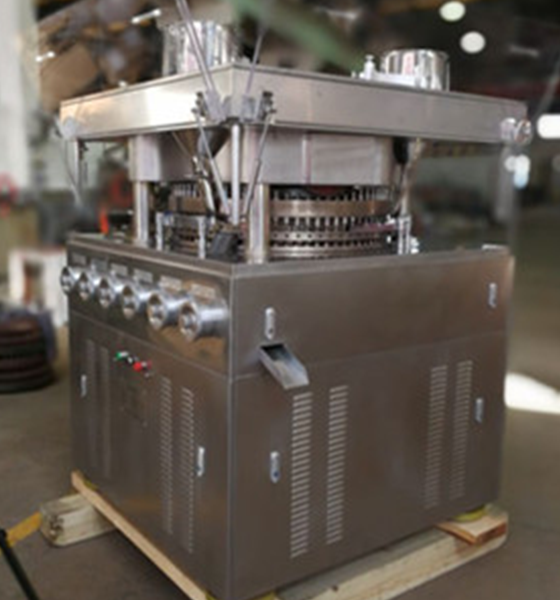
Maintaining Quality Standards with Disinfection Tablet Presses
Introduction
Disinfection tablets are essential products used in various industries, including healthcare, water treatment, and household cleaning. These tablets are designed to release active ingredients that kill or inhibit the growth of harmful microorganisms. To ensure their effectiveness, safety, and consistency, maintaining high-quality standards during the manufacturing process is crucial. Tablet presses play a central role in producing disinfection tablets, and their proper operation, calibration, and maintenance directly impact product quality.
This article explores the key aspects of maintaining quality standards in disinfection tablet production, focusing on tablet press operation, process validation, quality control measures, and regulatory compliance.
1. Understanding Disinfection Tablet Composition
Before discussing tablet press operations, it is essential to understand the composition of disinfection tablets. These tablets typically contain:
- Active ingredients (e.g., chlorine compounds, quaternary ammonium compounds, or hydrogen peroxide) that provide antimicrobial action.
- Binders and fillers to ensure tablet cohesion and proper disintegration.
- Lubricants to prevent sticking during compression.
- Disintegrants to facilitate tablet breakdown upon contact with water.
The formulation must be stable, uniform, and free from contaminants to ensure efficacy and safety.
2. Tablet Press Selection and Setup
Choosing the right tablet press is critical for producing high-quality disinfection tablets. Key considerations include:
- Compression force capability – Disinfection tablets often require high compression to ensure hardness and slow dissolution.
- Tooling design – Punches and dies must be corrosion-resistant (e.g., stainless steel or coated tooling) due to the aggressive nature of disinfectant chemicals.
- Dust extraction system – To prevent cross-contamination and ensure operator safety.
Once the appropriate press is selected, proper setup is essential:
- Tooling installation – Punches and dies must be aligned correctly to avoid tablet defects.
- Feeder adjustment – Ensures uniform powder flow into the die cavity.
- Compression force calibration – Must be optimized to achieve the desired tablet hardness without causing capping or lamination.
3. Process Validation and Quality Control
To maintain consistent quality, tablet production must undergo rigorous validation and quality control checks.
3.1. Process Validation
Process validation ensures that the tablet press consistently produces tablets meeting predetermined specifications. The stages include:
- Installation Qualification (IQ) – Confirms that the tablet press is installed correctly.
- Operational Qualification (OQ) – Verifies that the machine operates within specified parameters.
- Performance Qualification (PQ) – Demonstrates that the process consistently produces tablets of the required quality.
3.2. In-Process Quality Control
During production, real-time monitoring is essential. Key parameters include:
- Tablet weight – Checked using automatic weight control systems to ensure uniformity.
- Hardness testing – Ensures tablets are robust enough for handling and packaging.
- Thickness and diameter – Measured to confirm dimensional consistency.
- Disintegration and dissolution testing – Verifies that tablets break down as intended.
Any deviations must trigger corrective actions, such as adjusting compression force or reformulating the powder blend.
4. Maintenance and Cleaning of Tablet Presses
Disinfection tablet production involves corrosive chemicals that can damage equipment if not properly maintained.
4.1. Routine Maintenance
- Daily checks – Inspect punches, dies, and ejection systems for wear or corrosion.
- Lubrication – Use food-grade or chemically resistant lubricants to prevent contamination.
- Tooling replacement – Worn-out punches and dies can cause tablet defects and should be replaced promptly.
4.2. Cleaning Procedures
Residues from disinfectant powders can accumulate and affect tablet quality. Effective cleaning includes:
- Dry cleaning – Using vacuum systems to remove powder residues.
- Wet cleaning – Using solvents or detergents compatible with disinfectant chemicals.
- Sanitization – To prevent microbial contamination in subsequent batches.
5. Regulatory Compliance
Disinfection tablets are subject to strict regulations (e.g., FDA, EPA, or EU directives). Compliance ensures product safety and efficacy.
5.1. Good Manufacturing Practices (GMP)
- Documentation – Batch records, equipment logs, and validation reports must be maintained.
- Personnel training – Operators must be trained in GMP, safety, and hygiene practices.
- Environmental controls – Humidity and temperature must be monitored to prevent powder degradation.
5.2. Stability Testing
Disinfection tablets must undergo stability testing under various conditions (temperature, humidity) to ensure they remain effective throughout their shelf life.
6. Common Challenges and Solutions
6.1. Tablet Defects
- Capping/Lamination – Caused by improper compression force or formulation issues. Solution: Adjust compression settings or reformulate with better binders.
- Sticking – Due to inadequate lubrication or moisture. Solution: Use anti-stick coatings or optimize the powder blend.
6.2. Corrosion of Tooling
- Solution: Use high-grade stainless steel or coated tooling resistant to disinfectant chemicals.
7. Future Trends in Tablet Press Technology
Advancements in tablet press technology can further enhance quality control:
- Real-time monitoring with AI – Predictive analytics can detect deviations before defects occur.
- Automated cleaning systems – Reduce downtime and contamination risks.
- Eco-friendly formulations – Development of biodegradable disinfectant tablets.
Conclusion
Maintaining quality standards in disinfection tablet production requires a combination of proper equipment selection, process validation, stringent quality control, and regulatory compliance. Tablet presses must be operated, maintained, and cleaned meticulously to ensure consistent tablet quality. By implementing best practices and staying updated with technological advancements, manufacturers can produce effective, safe, and reliable disinfection tablets that meet industry and consumer expectations.
Final Recommendations
- Regularly audit processes to identify improvement areas.
- Invest in training for operators and quality control personnel.
- Stay updated with regulatory changes to ensure ongoing compliance.
By following these guidelines, manufacturers can uphold the highest quality standards in disinfection tablet production.
Copyright © 2025 Changzhou Wangqun Pharmaceutical Machinery Co., Ltd. Tous droits réservés.
Plan du siteCe site Web utilise des cookies pour vous garantir la meilleure expérience sur notre site Web.
 English
 Español
 Pусский
 العربية



 Téléphone
Commentaire
(0)