

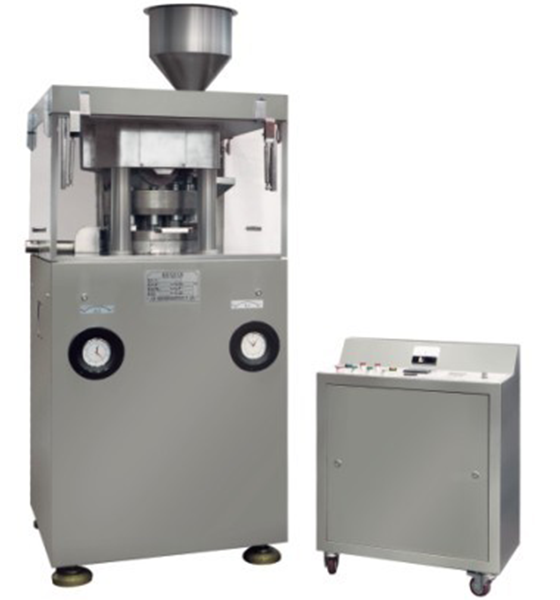
Tablet Press for Effervescent and Soluble Tablets: A Comprehensive Guide
Introduction
Effervescent and soluble tablets are specialized dosage forms designed to dissolve rapidly in water, releasing carbon dioxide (effervescent tablets) or forming a clear solution (soluble tablets). These tablets offer advantages such as improved patient compliance, faster drug absorption, and ease of administration for individuals who have difficulty swallowing conventional tablets.
Manufacturing effervescent and soluble tablets requires specialized tablet presses that can handle their unique formulation challenges, including moisture sensitivity, high powder compressibility, and the need for precise weight control. This guide explores the key aspects of tablet presses designed for effervescent and soluble tablet production, including their working principles, critical features, and operational considerations.
---
1. Understanding Effervescent and Soluble Tablets
1.1 Effervescent Tablets
Effervescent tablets contain a mixture of active pharmaceutical ingredients (APIs), acid (e.g., citric or tartaric acid), and a carbonate or bicarbonate base (e.g., sodium bicarbonate). When dissolved in water, these components react to produce carbon dioxide, resulting in effervescence.
Key Characteristics:
- Rapid disintegration and dissolution
- Improved taste masking
- Enhanced bioavailability
1.2 Soluble Tablets
Soluble tablets are designed to dissolve completely in water, forming a homogeneous solution. Unlike effervescent tablets, they do not produce gas.
Key Characteristics:
- Fast dissolution without effervescence
- Suitable for APIs with poor solubility
- Ideal for pediatric and geriatric patients
Both types require careful handling during manufacturing due to their hygroscopic nature and tendency to degrade in humid conditions.
---
2. Tablet Press Requirements for Effervescent and Soluble Tablets
Producing high-quality effervescent and soluble tablets demands tablet presses with specific features to address their unique challenges.
2.1 Moisture Control
Effervescent and soluble formulations are highly sensitive to moisture, which can trigger premature reactions or reduce tablet hardness. Tablet presses must operate in a controlled environment with low humidity (typically below 25% RH).
Solutions:
- Dehumidified Compression Zone: Some tablet presses feature enclosed compression areas with dry air or nitrogen purging.
- Quick Compression Cycles: Minimizing exposure to ambient air reduces moisture absorption.
2.2 High Compression Force
Effervescent and soluble powders often require higher compression forces than conventional tablets to achieve sufficient hardness without capping or lamination.
Solutions:
- Robust Tooling: Hardened steel punches and dies withstand high forces.
- Precision Force Control: Servo-driven or hydraulic systems ensure consistent compression.
2.3 Accurate Weight Control
Due to the high powder volume and low density of effervescent formulations, maintaining uniform tablet weight is critical.
Solutions:
- Advanced Feeder Systems: Force feeders or paddle-assisted feeders ensure uniform powder flow.
- Real-Time Monitoring: Weight control systems with feedback loops adjust fill depth dynamically.
2.4 Minimizing Friction and Sticking
Effervescent blends often contain sticky components (e.g., acids and sugars), increasing the risk of material adherence to punches and dies.
Solutions:
- Anti-Sticking Coatings: Chrome-plated or polished tooling reduces adhesion.
- Lubrication Systems: External lubricants (e.g., magnesium stearate) or internal die-wall lubrication prevent sticking.
2.5 Fast Disintegration and Dissolution
Tablet hardness must be balanced with disintegration time—too hard, and the tablet dissolves slowly; too soft, and it may break during handling.
Solutions:
- Optimized Compression Profiles: Multi-stage compression ensures proper bonding without over-compression.
- Specialized Tooling: Deep concave or flat-faced punches influence tablet hardness and dissolution.
---
3. Types of Tablet Presses for Effervescent and Soluble Tablets
3.1 Single-Station (Eccentric) Presses
- Suitable for small-scale production or R&D.
- Limited output (typically 50–200 tablets per minute).
- Manual or semi-automatic operation.
3.2 Rotary Tablet Presses
The most common choice for commercial production due to high output (up to 10,000+ tablets per minute).
Key Features:
- Multi-Station Tooling: Multiple punches and dies compress tablets simultaneously.
- Programmable Controls: Adjust compression force, speed, and dwell time.
- Dedicated Effervescent Models: Some rotary presses are optimized for hygroscopic materials.
3.3 Hydraulic Tablet Presses
- Used for high-force applications or specialized shapes.
- Slower than rotary presses but offer precise force control.
---
4. Critical Operational Considerations
4.1 Powder Handling and Feeding
- Feeder Design: Paddle-assisted or forced feeders prevent segregation.
- Hopper Design: Minimizes powder exposure to humidity.
4.2 Tooling Selection
- Punch and Die Materials: Hardened steel or carbide for durability.
- Shape and Size: Deep concave punches improve tablet hardness.
4.3 Environmental Controls
- Humidity Control: Manufacturing areas should maintain <25% RH.
- Temperature Stability: Prevents ingredient degradation.
4.4 Cleaning and Maintenance
- Tooling Cleaning: Regular removal of residual powder prevents sticking.
- Corrosion Prevention: Stainless steel components resist acid exposure.
---
5. Quality Control and Testing
5.1 Tablet Hardness Testing
Ensures tablets withstand packaging and transport without breaking.
5.2 Disintegration and Dissolution Testing
- Effervescent Tablets: Should dissolve within 2–3 minutes in water.
- Soluble Tablets: Must form a clear solution without residue.
5.3 Moisture Content Analysis
Critical for stability; moisture levels should remain below 1–2%.
---
6. Future Trends in Effervescent and Soluble Tablet Manufacturing
- Continuous Manufacturing: Improves efficiency and reduces batch variability.
- Advanced Lubrication Systems: Reduces reliance on external lubricants.
- AI-Based Process Optimization: Real-time adjustments for better quality control.
---
Conclusion
Tablet presses for effervescent and soluble tablets must address unique challenges such as moisture sensitivity, high compression forces, and precise weight control. Rotary tablet presses with specialized tooling, environmental controls, and advanced feeding systems are the most efficient choice for commercial production. By optimizing compression parameters and maintaining strict quality control, manufacturers can produce high-quality effervescent and soluble tablets that meet regulatory and patient needs.
Future advancements in continuous manufacturing and smart process monitoring will further enhance the efficiency and consistency of effervescent and soluble tablet production.
(Word count: ~2000)
Copyright © 2025 Changzhou Wangqun Pharmaceutical Machinery Co., Ltd. Tous droits réservés.
Plan du siteCe site Web utilise des cookies pour vous garantir la meilleure expérience sur notre site Web.
 English
 Español
 Pусский
 العربية



 Téléphone
Commentaire
(0)