

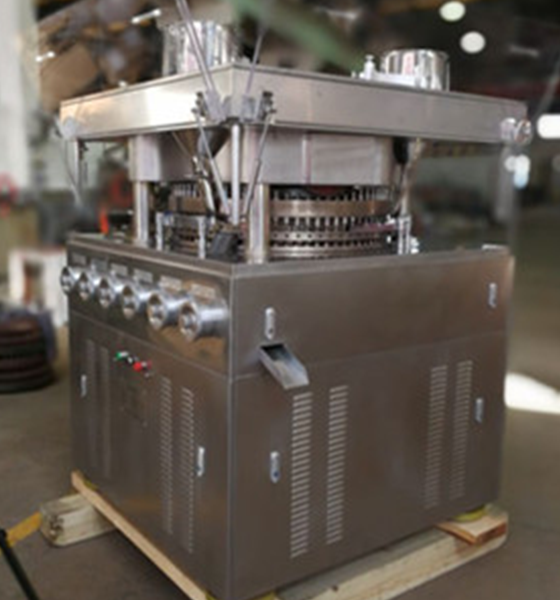
Tablet Press for Deep-Drawing Applications
Introduction
Tablet presses are essential machines in the pharmaceutical, food, and chemical industries for producing solid dosage forms such as tablets, pellets, and other compacted products. Among the various types of tablet presses, those designed for deep-drawing applications are particularly important for manufacturing tablets with complex geometries, high density, and precise dimensions.
Deep-drawing tablet presses are specialized machines that enable the production of tablets with deep cavities, intricate shapes, or high aspect ratios. These presses are widely used in industries where uniformity, strength, and precise dimensions are critical. This article explores the working principles, key components, advantages, and applications of tablet presses for deep-drawing operations.
---
Working Principle of a Deep-Drawing Tablet Press
A deep-drawing tablet press operates on the principle of compression and deformation. Unlike conventional tablet presses that primarily focus on compaction, deep-drawing presses apply additional force to draw the material into a deep die cavity, forming a tablet with significant depth relative to its diameter.
Key Stages in Deep-Drawing Tablet Compression:
1. Feeding Stage:
- Powder or granular material is fed into the die cavity through a feed frame or hopper.
- The material must be uniformly distributed to ensure consistent tablet formation.
2. Pre-Compression Stage:
- The upper punch descends to apply initial pressure, compacting the material slightly to remove air gaps and improve cohesion.
3. Deep-Drawing Stage:
- The main compression punch applies high force, pushing the material deep into the die cavity.
- The material undergoes plastic deformation, forming the desired deep-drawn shape.
4. Ejection Stage:
- The lower punch rises to eject the formed tablet from the die.
- The tablet is then conveyed for further processing or packaging.
The deep-drawing process requires precise control over compression force, dwell time, and punch movement to prevent defects such as capping, lamination, or cracking.
---
Key Components of a Deep-Drawing Tablet Press
1. Die System
- The die defines the shape and depth of the tablet.
- Deep-drawing dies are designed with smooth inner surfaces to minimize friction and ensure uniform material flow.
- Hardened steel or carbide materials are used for durability.
2. Punches (Upper and Lower)
- Upper punches apply compression force, while lower punches support the material and assist in ejection.
- Punches must be precisely aligned to prevent misalignment defects.
- Special coatings (e.g., chromium or diamond-like carbon) reduce wear and friction.
3. Compression Rollers
- These rollers control the force applied during compression.
- Adjustable roller settings allow customization of compression depth and force.
4. Turret
- The turret holds multiple punches and rotates to facilitate continuous tablet production.
- High-speed deep-drawing presses use multi-station turrets for increased efficiency.
5. Control System
- Modern tablet presses feature PLC-based controls for monitoring compression force, speed, and tablet weight.
- Real-time adjustments ensure consistent tablet quality.
6. Lubrication System
- Reduces friction between punches and dies, extending tool life.
- Food-grade or pharmaceutical-grade lubricants are used depending on the application.
---
Advantages of Deep-Drawing Tablet Presses
1. Ability to Produce Complex Shapes
- Deep-drawing presses can create tablets with deep cavities, undercuts, or multi-tiered designs.
- Ideal for controlled-release formulations where drug release depends on tablet geometry.
2. High Density and Strength
- The deep-drawing process compacts material more effectively than standard compression, resulting in stronger tablets.
- Reduced porosity minimizes friability and improves tablet durability.
3. Improved Material Utilization
- Less material wastage due to precise control over compression and ejection.
- Suitable for expensive or high-potency active ingredients.
4. High Production Efficiency
- Modern deep-drawing presses operate at high speeds (up to thousands of tablets per minute).
- Automated systems reduce manual intervention and increase throughput.
5. Versatility in Applications
- Suitable for pharmaceuticals, nutraceuticals, confectionery, and industrial products.
- Can handle a wide range of materials, including powders, granules, and blends.
---
Applications of Deep-Drawing Tablet Presses
1. Pharmaceutical Industry
- Controlled-Release Tablets: Deep-drawn tablets with hollow centers or layered structures allow for delayed or sustained drug release.
- Orally Disintegrating Tablets (ODTs): High porosity and precise dimensions ensure rapid disintegration in the mouth.
- Buccal/Sublingual Tablets: Deep-drawing enables thin, flat tablets that dissolve quickly under the tongue.
2. Food and Confectionery Industry
- Chewable Tablets: Deep-drawing ensures uniform texture and strength.
- Effervescent Tablets: High compaction prevents premature disintegration.
- Molded Chocolate/Candy Products: Used for creating intricate shapes with deep impressions.
3. Chemical and Industrial Applications
- Catalyst Tablets: High-density tablets for chemical reactions.
- Detergent Tablets: Deep-drawing ensures slow dissolution in water.
- Ceramic and Metal Powder Compacts: Used in sintering and powder metallurgy.
---
Challenges and Solutions in Deep-Drawing Tablet Compression
1. Capping and Lamination
- Cause: Insufficient dwell time or excessive compression force.
- Solution: Optimize compression parameters and use pre-compression.
2. Sticking and Picking
- Cause: Poor lubrication or rough punch surfaces.
- Solution: Apply anti-sticking coatings and ensure proper die polishing.
3. Weight Variation
- Cause: Inconsistent powder flow or feeding issues.
- Solution: Use a forced feeder system and monitor powder density.
4. Tool Wear
- Cause: High friction and abrasive materials.
- Solution: Use hardened tooling and automated lubrication systems.
---
Future Trends in Deep-Drawing Tablet Press Technology
1. AI and Machine Learning Integration
- Predictive maintenance and real-time quality control using AI algorithms.
2. Advanced Tooling Materials
- Development of ultra-hard coatings to extend tool life.
3. Energy-Efficient Designs
- Hydraulic and servo-driven presses for reduced power consumption.
4. 3D-Printed Dies and Punches
- Customized tooling for unique tablet shapes.
5. Continuous Manufacturing
- Integration with continuous granulation and coating systems.
---
Conclusion
Deep-drawing tablet presses are critical for producing high-quality tablets with complex geometries and superior mechanical properties. Their ability to handle a wide range of materials while maintaining precision makes them indispensable in pharmaceuticals, food, and industrial applications. With advancements in automation, tooling, and process control, deep-drawing tablet presses will continue to evolve, offering even greater efficiency and versatility in tablet manufacturing.
By understanding the working principles, components, and challenges associated with deep-drawing presses, manufacturers can optimize their processes to achieve consistent, high-performance tablet production.
Copyright © 2025 Changzhou Wangqun Pharmaceutical Machinery Co., Ltd. Tous droits réservés.
Plan du siteCe site Web utilise des cookies pour vous garantir la meilleure expérience sur notre site Web.
 English
 Español
 Pусский
 العربية



 Téléphone
Commentaire
(0)